Introduction
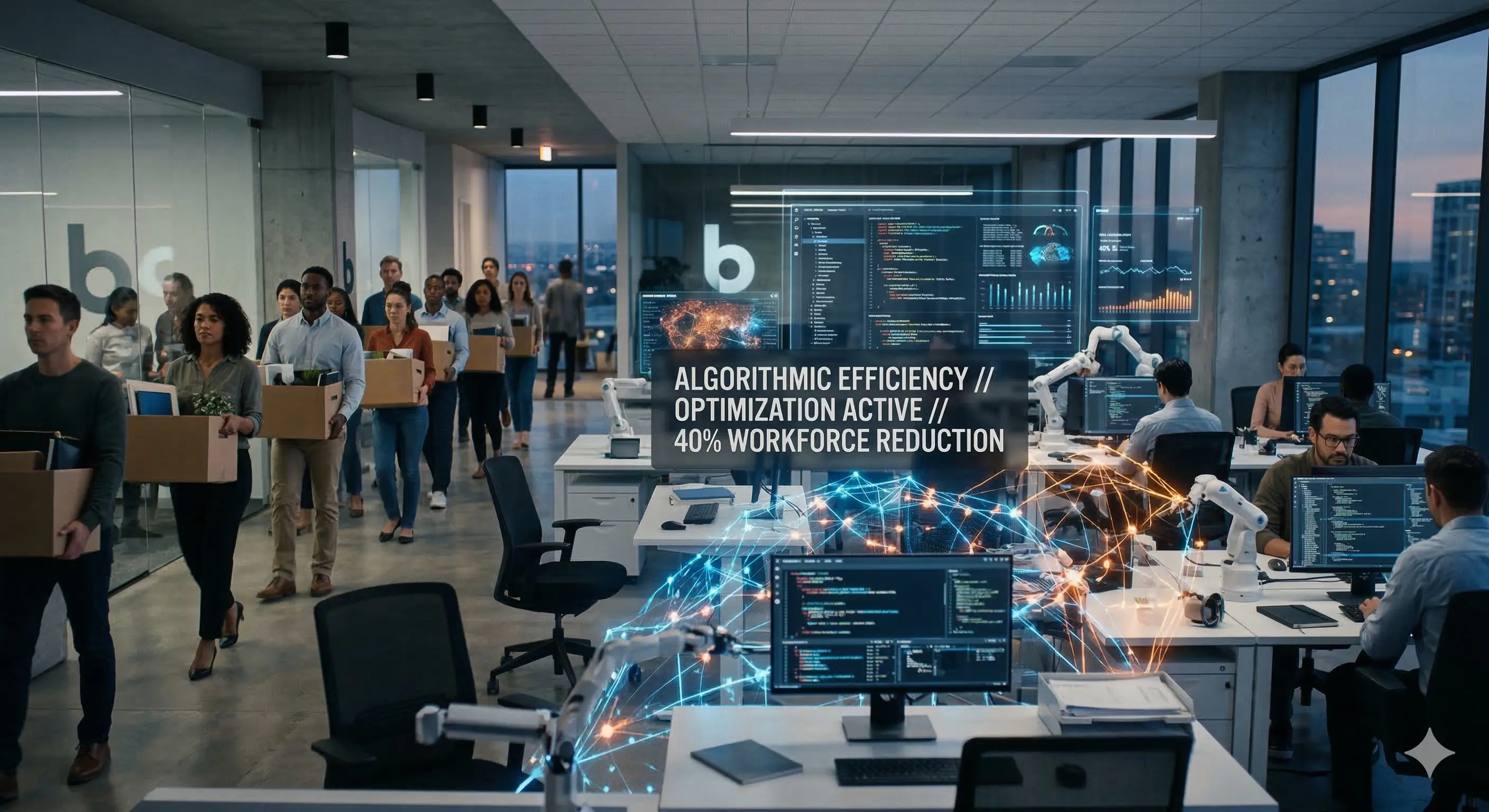
When news broke that Block planned to cut nearly 40% of its workforce, it sent shockwaves across the tech and fintech ecosystem.
At first glance, it looks like another cost-cutting move. But if you look deeper, this is part of a much bigger shift — one driven by AI, automation, and operational efficiency at scale.
This isn’t just about layoffs. It’s about how companies are restructuring entire workflows using AI systems.
And if you're working in tech, backend systems, or automation — this directly impacts your future.
What “Algorithmic Efficiency” Actually Means
In simple terms, algorithmic efficiency means:
Replacing repetitive human workflows with automated systems that can perform the same tasks faster, cheaper, and more consistently.
This includes:
- AI-powered decision systems
- Automated data pipelines
- Machine learning models replacing manual analysis
- Backend workflows optimized through orchestration tools
Why Companies Are Making This Shift
1. Cost Pressure
Salaries, infrastructure, and scaling teams are expensive.
- Run 24/7
- Scale instantly
- Reduce long-term operational cost
2. Speed and Scalability
Traditional workflows depend on human bandwidth and slow down during peak demand.
- Process thousands of operations in parallel
- Maintain consistent performance
3. Competitive Pressure
If one company adopts AI and reduces cost by 30–50%, competitors are forced to follow. This creates a domino effect across industries.
My Real Experience Working with Automation Systems
From my experience working as a backend developer with microservices, scraping systems, and automation pipelines, I’ve seen this shift happening gradually.
For example:
- We had scraping systems running across 60+ Linux servers
- Cron jobs were handling data extraction every minute
- Monitoring failures manually became nearly impossible
To solve this, we moved towards:
- Centralized orchestration using workflow tools
- Automated monitoring instead of manual checks
- Structured pipelines instead of scattered scripts
Result:
- Fewer manual interventions
- Better reliability
- Reduced operational overhead
What Jobs Are Actually Being Replaced?
AI is not replacing all jobs. It is replacing specific types of work.
Most affected
- Repetitive data processing tasks
- Manual review workflows
- Basic reporting and analysis
- Operational monitoring
Less affected
- System design
- Decision-making roles
- Complex problem solving
- Leadership and strategy
The Hidden Reality Most People Miss
This shift is not just about replacing people. It’s about changing how work is structured.
Instead of 10 people doing manual work, companies now want 2–3 engineers building systems that do the same work automatically.
Where This Breaks in Real Life
1. Integration Complexity
- Legacy systems don’t integrate easily
- APIs break
- Data is often unstructured
2. Trust Issues
- Teams don’t fully trust automation
- One wrong output reduces confidence
3. Cost Misunderstanding
- API usage costs
- Infrastructure costs
- Engineering effort
- Maintenance
4. Over-Automation Risk
- Loss of control
- Poor decision-making
- Critical mistakes
Who Should NOT Rush Into AI Adoption
- Teams with unstructured or scattered data
- Organizations without strong backend systems
- Simple workflows that don’t need automation
- Lack of engineering capability
Practical Action Plan
Step 1: Learn Automation Tools
- Workflow orchestration (e.g., Airflow)
- Backend system design
- API integration
Step 2: Build Real Systems
- Automate real workflows
- Create data pipelines
- Build monitoring systems
Step 3: Focus on Problem Solving
AI tools are available to everyone. What matters is how you use them and what problems you solve.
Step 4: Move Towards System Thinking
Think: “How can I build a system that does this automatically?”
Final Thoughts
The workforce reduction at Block is not an isolated event. It represents a broader shift where:
- Efficiency is prioritized over headcount
- Systems replace repetitive human work
- Engineers become more valuable than operators
This doesn’t mean fewer opportunities. It means the nature of opportunities is changing.
If you adapt early, you gain an advantage. If you ignore it, the market will move ahead without you.
About the Author
Manoj Bhatt
Backend Developer with 5+ years of experience in Python, microservices, and automation systems.
Worked on large-scale data pipelines, scraping infrastructure, and workflow orchestration.