India’s AI Power Play: Inside PM Modi’s Strategic Summit on AI Ethics
If you have been scrolling through your news feed lately, you probably noticed that the conversation around Artificial Intelligence in India just shifted gears. It is no longer just about "cool tools" or chatbots. It is about policy, sovereignty, and safety.
Recently, Prime Minister Narendra Modi held high-level discussions with top global tech CEOs and industry leaders. The agenda? AI Ethics, Business Responsibility, and the future of India's Digital Public Infrastructure (DPI).
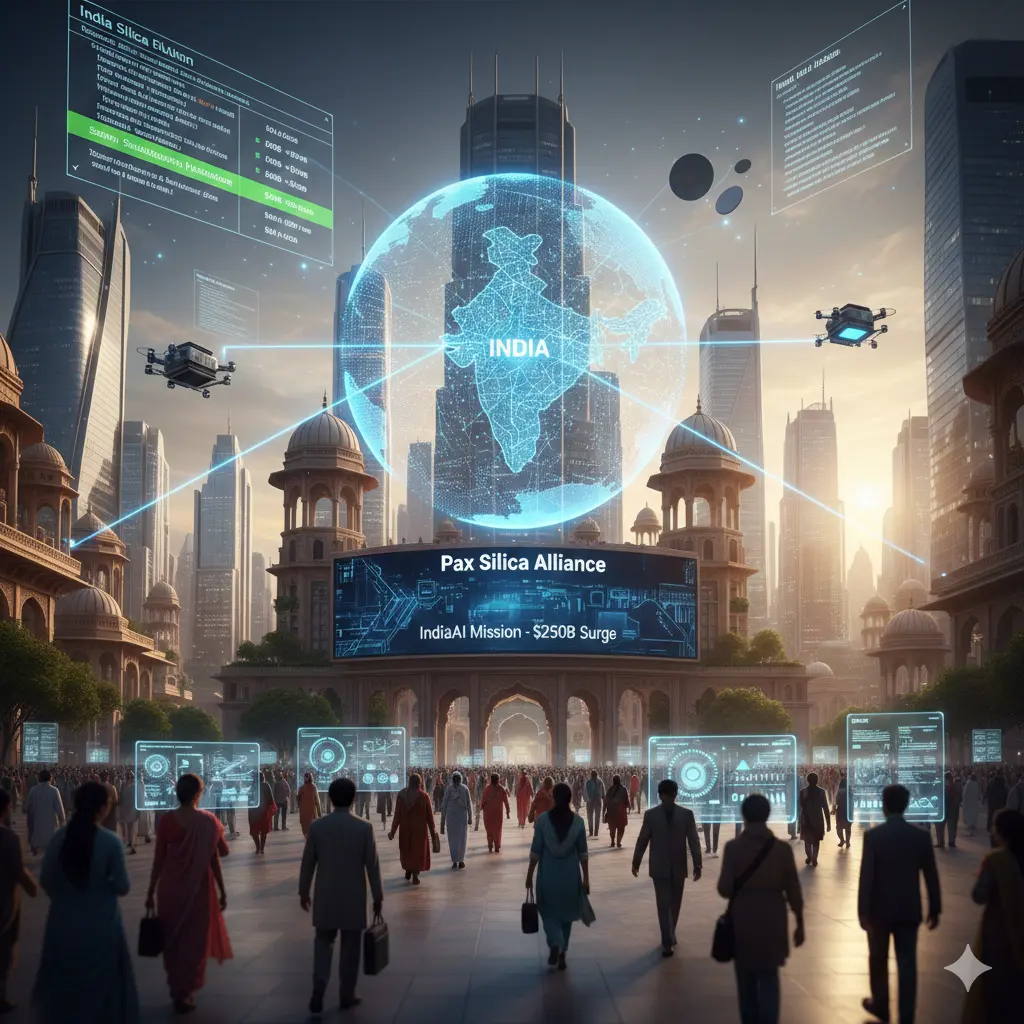
This wasn't just a photo op. For businesses, developers, and investors, the takeaways from this summit are actually a roadmap for the next five years. India is positioning itself not just as a consumer of AI, but as the Use Case Capital of the world. But with great power comes the need for some serious guardrails.
In this post, I am going to break down exactly what this means for you, whether you run a startup, manage a tech team, or are just trying to understand where this industry is heading. Let's dive in.
The Core Message: "AI for All" but with Guardrails
The biggest headline from the summit is the reinforcement of India's specific stance on AI. Unlike the EU, which has taken a very strict regulatory approach (the "risk-based" model), and unlike the US, which has been largely market-driven, India is carving a third path.
PM Modi emphasized that AI must be transparent, safe, and accessible. The government isn't looking to stifle innovation, but they are drawing a red line when it comes to user harm—specifically deepfakes and misinformation.
For businesses, this signals a shift. You can expect that future compliance won't just be about data storage (like the DPDP Act); it’s going to be about algorithm accountability.
Key Pillars Discussed at the Summit
- Sovereign AI: India wants to build its own compute infrastructure. Reliance on foreign GPUs is seen as a bottleneck.
- Democratization: AI tools shouldn't just be for English speakers. The "Bhashini" initiative (real-time translation) is a prime example here.
- Ethical AI: Strict stance on deepfakes and content labeling. If your AI generates an image, it needs to be watermarked or identifiable.
Business Impact: What CEOs and Founders Need to Know
Okay, so what does this high-level policy talk mean for your bottom line? A lot, actually.
If you are building AI applications in India or for the Indian market, the "wild west" days are ending. The government is signaling that they want Responsible AI. This isn't just a buzzword anymore; it is becoming a compliance requirement.
1. The Rise of "Sovereign Compute"
One of the most interesting points raised was the need for India to have its own GPU clusters. For startups, this could eventually mean subsidized access to compute power, similar to how UPI subsidized digital payments. Keep an eye on government tenders and grants related to the IndiaAI Mission.
2. Data Privacy is Non-Negotiable
The CEOs present acknowledged that training data must be sourced ethically. If your business model relies on scraping user data without consent, you are standing on shaky ground. The discussion hinted at stricter audits for how models are trained on Indian datasets.
Policy Framework: India vs. The World
It is helpful to compare where India stands relative to other global powers. This helps us predict where the regulations might go next.
| Region | Primary Focus | Impact on Business |
|---|---|---|
| European Union (EU) | Strict Regulation (EU AI Act) | High compliance costs; difficult for small startups to enter. |
| United States | Innovation & Safety | Self-regulation mostly, with executive orders focusing on national security. |
| India | Hybrid (Innovation + Safety) | Focus on user protection (Deepfakes) and Digital Public Goods. Moderate regulation. |
India’s approach is unique because it leverages the Digital Public Infrastructure (DPI) stack. The government wants AI to be built on top of stacks like Aadhaar and UPI, making it a public good rather than just a private luxury.
The "Deepfake" Dilemma
A significant portion of the summit was dedicated to the issue of Deepfakes. PM Modi has previously called deepfakes a threat to democracy. During this meeting, tech leaders were urged to fast-track technology that can detect synthetic media.
If you are in the content creation or media space, you should start looking into C2PA standards (Coalition for Content Provenance and Authenticity). Implementing credentials that prove your content is human-made (or labeled AI) might soon be an industry standard in India.
Case Study: How Fintech is Adapting
Let’s look at a quick example to make this practical. Consider the Fintech sector in India.
The Challenge: Fintech apps are using AI for credit scoring. But, if the AI is biased against certain demographics, that violates the principle of "AI for All."
The Shift: Post-summit, we are seeing a push for "Explainable AI" (XAI). Lenders can't just say "The computer said no." They need to explain why. Companies like Paytm and PhonePe are likely watching these ethics guidelines closely to ensure their algorithms don't invite a regulatory crackdown from the RBI.
Pros and Cons of India’s Ethical Stance
Nothing is perfect, right? Let’s look at the two sides of this coin.
The Pros
- Trust: Users are more likely to adopt AI if they know it is regulated and safe.
- Local Growth: By pushing for sovereign infrastructure, local data center companies get a massive boost.
- Clarity: Clear guidelines are better than vague threats. Businesses know the rules of the game.
The Cons
- Compliance Burden: Smaller startups might struggle to afford the "safety checks" that big tech can easily handle.
- Speed: Ethics reviews can slow down product launches. In the AI race, speed is everything.
FAQs on the AI Ethics Summit
1. Will India ban AI tools like ChatGPT?No, absolutely not. The government is focused on regulation, not banning. They want these tools to be used responsibly.
2. What is the "IndiaAI Mission"?It is a government initiative backed by over ₹10,000 crore to build computing infrastructure, support startups, and create high-quality datasets.
3. How does this affect freelancers?If you use AI to generate content, you may soon need to label it. Transparency is key.
4. Did they discuss job losses?Yes. The consensus is that upskilling is urgent. The focus is on "AI augmentation" (helping humans) rather than replacement.
5. What is the stance on Open Source AI?India is generally very supportive of open-source models (like Llama) because they democratize access for smaller developers.
Final Thoughts: The Road Ahead
The PM Modi CEO Summit on AI Ethics wasn't just a talk shop. It was a signal that the "wild" phase of AI adoption in India is transitioning into a "mature" phase.
For us in the industry, this is actually good news. Uncertainty is bad for business. Knowing that the government supports innovation—provided we don't break society with deepfakes—gives us a clear runway to build.
Your Next Step: If you are running a business or a blog, audit your current AI usage. Are you being transparent? Are you protecting user data? Start implementing these ethical checks now, before they become mandatory laws.