The Pax Silica Alliance: Decoding India’s $250B AI Surge and the New Global Silicon Order
There is a quiet shift happening in the global power structure, and it is not being fought with traditional weapons. It is being fought with transistors, lithography machines, and massive liquid-cooled data centers. We are entering the era of 'Pax Silica'—a period of relative global stability maintained by the mutual dependence on semiconductor supply chains and AI compute power.
At the center of this whirlwind is India. With a staggering $250 billion projected surge in AI-related infrastructure and development over the next decade, the subcontinent is no longer just the world's back office. It is becoming the sovereign foundry of the East. But moving from a service-based economy to an AI-first powerhouse is not as simple as throwing money at a problem.
What is the Pax Silica Alliance?
Pax Silica refers to a strategic alignment between democratic tech powers—primarily the US, India, Japan, and South Korea—to secure the 'silicon shield.' This alliance aims to diversify chip production away from geopolitical flashpoints and integrate AI capabilities into national security and economic policy. For India, this means leveraging the IndiaAI Mission to build a 10,000-GPU compute capacity, allowing the nation to host its own 'sovereign AI.'
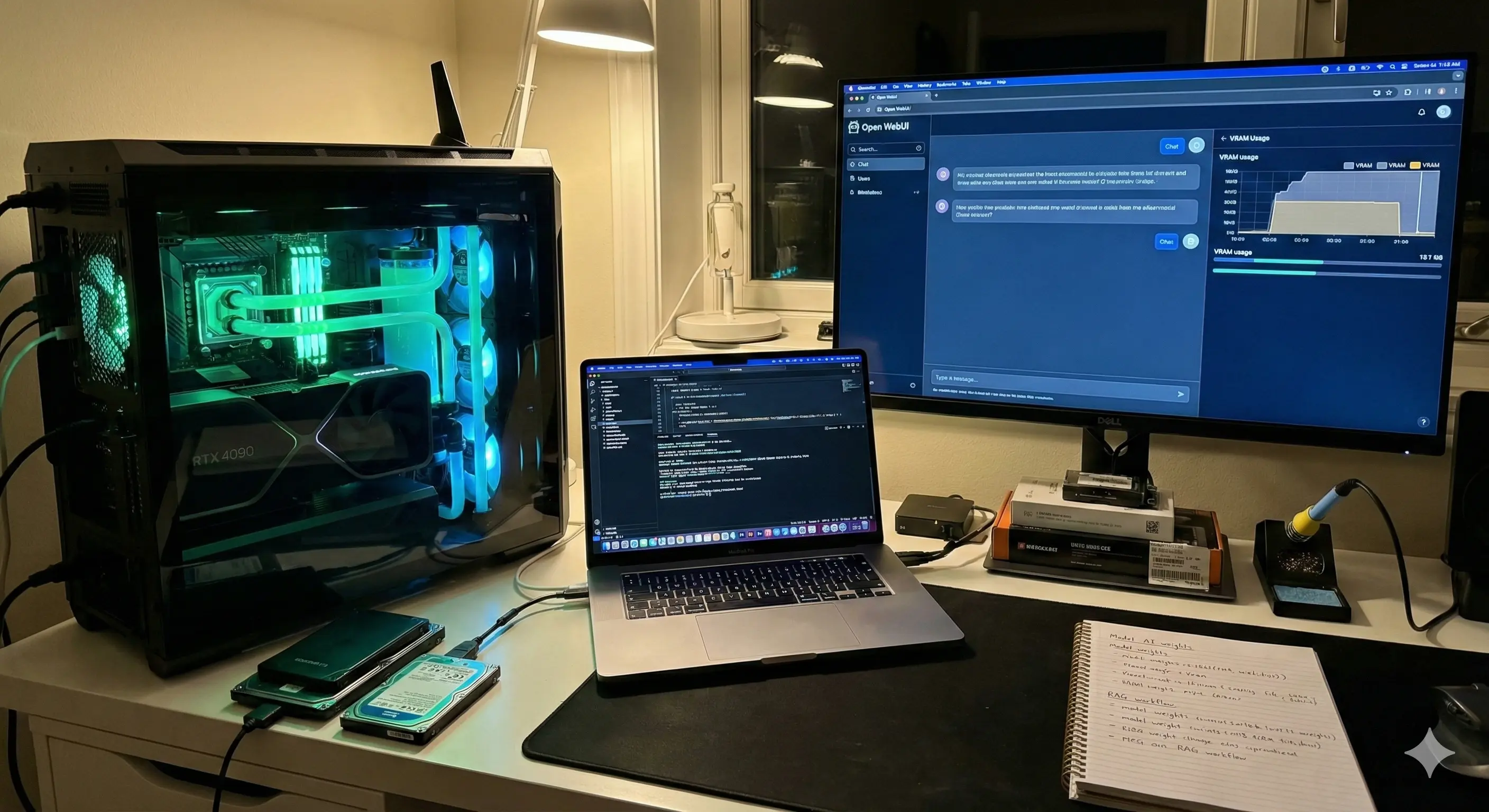
In real workflows, teams notice a massive bottleneck when they rely on offshore API calls for sensitive data processing. I have spoken with developers in Bengaluru who are tired of the latency and the data sovereignty 'grey areas' that come with using models hosted entirely in North American data centers. Pax Silica is the geopolitical answer to that frustration—bringing the hardware closer to the data.
The $250 Billion Surge: Where is the Money Going?
The numbers are massive, but they are not just for show. The $250 billion figure represents a mix of government incentives (PLI schemes), private equity, and enterprise CapEx. Here is how that capital is actually being deployed across the landscape:
| Sector | Estimated Allocation | Primary Goal |
|---|---|---|
| Semiconductor Fabrication | $40B - $60B | Establishing domestic 28nm and 40nm chip plants. |
| AI Infrastructure (GPU Clusters) | $30B - $50B | Building high-density data centers for 'IndiaAI'. |
| Enterprise AI Adoption | $80B - $100B | Integrating LLMs into Finance, Healthcare, and Law. |
| R&D and Human Capital | $20B - $30B | Upskilling the workforce in prompt engineering and model fine-tuning. |
But here is the thing: building the fab is the easy part. One issue that keeps coming up is the sheer energy and water requirement of these facilities. A single modern AI data center can consume as much power as a small city. In practice, the 'surge' will only happen if India can modernize its power grid alongside its digital infrastructure. It’s a physical challenge as much as a digital one.
The Rise of Domain-Specific AI: A Case Study in Law
One of the most interesting corners of this surge is the development of specialized tools, like those pioneered by Anthropic and their partners in the legal tech space. While general-purpose models are great for writing emails, they fail miserably in high-stakes environments like the Indian judicial system, which has a backlog of over 50 million cases.
How Legal AI Actually Works in a Professional Setting
Unlike a standard chatbot, a specialized legal AI tool operates through a process called Retrieval-Augmented Generation (RAG). Here is the workflow:
- Ingestion: The tool scans thousands of pages of case law, specific to Indian statutes.
- Vectorization: It turns that text into mathematical 'embeddings' so it understands context, not just keywords.
- Querying: A lawyer asks, 'What is the precedent for specific performance in real estate contracts under the 2018 amendment?'
- Verification: The AI provides an answer but—critically—links directly to the specific paragraph of the Supreme Court judgment it cited.
In a real-world use case, a mid-sized law firm in Delhi used a similar specialized system to reduce their due diligence time on a merger from three weeks to four days. They didn't use the AI to write the final contract; they used it to find the 'needles in the haystack' that humans usually miss at 2 AM.
Where This Breaks Down in Real Use
It is easy to get caught up in the hype, but there are places where these AI systems fall flat. The biggest failure point is 'Hallucination of Authority.' In legal and financial workflows, AI sometimes invents case citations or financial regulations that sound incredibly plausible. If a junior analyst doesn't have the experience to spot a fake citation, the whole system becomes a liability rather than an asset.
Furthermore, these tools often struggle with the 'Long Tail' of logic. They are trained on the most common scenarios. When a case involves a unique, never-before-seen intersection of laws, the AI will often default to the most 'popular' answer, which is fundamentally wrong in a court of law. It lacks the 'spirit of the law'—the nuanced understanding of intent that a human judge possesses.
Who Should NOT Jump on This Trend?
Despite the $250 billion surge, not everyone needs to be an 'AI-first' company right now. You should probably avoid heavy investment in these tools if:
- You have a 'Dirty Data' problem: If your company's records are scattered across paper files and unorganized PDFs, even a billion-dollar AI will produce garbage results.
- You operate in high-volatility creative niches: If your value is purely based on 'vibe' and unique human perspective, over-automating your content will likely alienate your audience.
- Small scale operations: For a solo practitioner with low volume, the seat cost and setup time for high-end enterprise AI often outweigh the manual labor savings.
FAQs: Navigating the Pax Silica Era
Is Pax Silica just another name for a trade war?
Not exactly. While trade wars are about restriction, Pax Silica is about construction. It’s a proactive movement to build redundant supply chains so that a conflict in one region doesn't collapse the global digital economy.
Will these AI tools replace Indian IT workers?
Replace? No. Reposition? Yes. The worker who only knows how to write basic scripts is at risk. The worker who knows how to manage an AI fleet to write those scripts is going to see their salary double.
Why is India spending so much on 'Sovereign AI'?
Because data is the new oil, and you don't want your oil stored in someone else’s tank. By having domestic compute power, India ensures that its national data isn't subject to the laws or whims of foreign governments.
Can I use these tools for financial advice?
Absolutely not. These tools are designed to process information, not predict market movements or provide fiduciary guidance. Always consult a human professional for financial decisions.
What is the biggest risk to the $250B surge?
Infrastructure lag. If the physical building of data centers and power plants doesn't keep pace with the software investment, we will see a lot of 'zombie projects' that have funding but no place to run.
The Road Ahead: Beyond the Hype
The Pax Silica alliance and India's massive capital injection represent a 'point of no return.' We are moving away from the era where AI was a fun toy and into an era where it is a foundational utility, much like electricity or water. For those of us on the ground, the challenge isn't just 'learning AI'—it’s learning how to maintain our human judgment in a world where the machine is always whispering the 'most likely' answer.
And so, the real winners won't be the ones with the most GPUs. They will be the ones who can balance this incredible new compute power with the messy, unpredictable reality of human business. It’s a great time to be a builder, but it’s an even better time to be a critical thinker.
Disclaimer: This content is for informational purposes only and does not constitute financial, legal, or professional advice. The 'Pax Silica' concept is a geopolitical framework and should be analyzed as such. For more insights on global tech shifts, check out reports from the Ministry of Electronics and Information Technology (MeitY).