The Rise of the AI Factory: Manufacturing Intelligence at Scale
If you look back at history, the Industrial Revolution changed everything because it decoupled production from human muscle. Suddenly, we had factories that could produce goods—textiles, steel, cars—at a scale impossible for a craftsman. Today, right now, we are seeing something eerily similar. But we aren't manufacturing widgets or gadgets.
We are manufacturing intelligence.
Welcome to the era of the "AI Factory."
You might have heard this term floating around tech circles, maybe mentioned by NVIDIA’s CEO Jensen Huang. It sounds like a buzzword, I know. But if you dig a little deeper, you realize it’s actually a fundamental shift in how we look at computers. We used to think of data centers as these cold storage rooms where we kept our digital files—like a really big, expensive hard drive in the cloud. That era is ending.
The new data center isn't a storage locker; it’s a manufacturing plant. And the product it spits out is tokens, insights, and generative solutions.
What Exactly is an AI Factory?
Let's break this down simple. In the old computing model (let's say, the last 20 years), you wrote a program, put it on a server, and users retrieved it. Input -> Processing -> Output. It was static.
An AI Factory is different. It is a massive infrastructure designed primarily to run deep learning models. It takes in raw material (data and electricity) and processes it through massive fleets of GPUs (Graphics Processing Units) to produce a very valuable output: Intelligence.
Think of it like this:
- Raw Material: Petabytes of video, text, DNA sequences, or code.
- The Machinery: High-performance computing clusters (like NVIDIA H100s or Blackwell chips).
- The Product: A model that can drive a car, write code, diagnose a disease, or create a video.
This shift implies that companies are no longer just "software companies." They are becoming intelligence manufacturers. If you are building a modern application, you aren't just writing lines of C++ or Python; you are curating data to train a model that writes the Python for you.
The 3 Pillars of the AI Factory
To understand why this is blowing up right now, we have to look at the three things making it possible. It’s not just magic; it’s engineering.
1. Extreme Compute (The Engines)
Traditional CPUs (the chip in your laptop) are great for serial tasks—doing one thing after another really fast. But AI needs parallel processing. It needs to calculate millions of probabilities at the exact same time. This is where GPUs come in. An AI factory is essentially a warehouse filled with these chips, wired together to act as one giant super-brain.
2. The Data Pipeline (The Fuel)
An engine is useless without gas. For an AI factory, data is the fuel. But it’s not just "big data" anymore. It is synthetic data, reinforcement learning data, and multimodal data (video + audio + text). The factory needs a constant stream of this to keep the models learning. If the pipeline stops, the factory shuts down.
3. The Network (The Nervous System)
This is the part people usually ignore, but it's critical. If you have 10,000 GPUs trying to talk to each other to train a massive model like GPT-4 or Gemini, the cables connecting them matter. We are talking about InfiniBand and high-speed Ethernet that moves data so fast, physics almost becomes the bottleneck.
Why the Sudden Shift?
You might be asking, "Why now?" We've had computers for decades.
It comes down to Generative AI. Before 2022, AI was mostly analytical. It looked at data and said "Yes" or "No" (Is this a cat? Is this fraud?). That was useful, but limited.
Generative AI creates. It generates new value. Because the output is so high-value (a full marketing campaign, a working software plugin, a legal brief), the economic incentive to build massive factories to produce this output has skyrocketed. Companies are realizing that whoever owns the best factory owns the market.
| Traditional Data Center | Modern AI Factory |
|---|---|
| Goal: Retrieve & Store Information | Goal: Generate Intelligence & Tokens |
| Workload: Many users running small tasks | Workload: Few massive jobs (Training/Inference) |
| Traffic: North-South (User to Server) | Traffic: East-West (Server to Server) |
| Value: Hosting applications | Value: Producing capabilities |
From Software to "Token Generation"
This is a weird concept to wrap your head around, but bear with me. In this new world, the unit of economy is the Token.
When you use ChatGPT or Claude, you are paying for tokens (parts of words). The AI Factory’s job is to produce these tokens as cheaply and accurately as possible. It is literally a manufacturing process.
If you run a customer service agency, you used to hire 100 people. Now, you might rent capacity from an AI Factory to generate the "customer service tokens" needed to answer emails. The factory produces the labor. The economics of business are changing from paying salaries to paying for compute.
Real-World Use Case: The Automotive Industry
Let's look at a real example so this isn't just theory. Take a modern electric car manufacturer. They don't just build cars; they build autonomous driving systems.
To teach a car how to drive, you cannot just write code that says "if red light, stop." It's too complex. The world is messy. Instead, the car company collects billions of miles of driving video. They dump this into their AI Factory.
The factory churns through this video, training a neural network to understand physics, pedestrians, and rain. The output is a software update sent to the car. In this scenario, the car is just the hardware shell; the AI factory manufactures the driver.
The Challenges (It's Not All Sunshine)
I’d be lying if I said this was a perfect transition. Building these factories is incredibly hard and frankly, expensive.
The Energy Crisis
AI Factories are hungry. Like, really hungry. A rack of AI servers consumes way more power than a traditional server rack. We are starting to see data centers being built next to nuclear power plants just to guarantee steady electricity. There is a genuine concern about the carbon footprint of training massive models. It’s a problem that needs solving, fast.
The "Black Box" Problem
When you manufacture a physical car, you can inspect the brakes. You know exactly how they work. When an AI factory produces a model, sometimes even the creators aren't 100% sure how it arrived at a certain conclusion. This lack of interpretability is a risk for businesses relying on these "manufactured" decisions.
How to Prepare Your Business
You probably aren't going to build your own $500 million AI factory. That’s for the Googles and Microsofts of the world. But you will be a customer of these factories.
- Audit Your Data: Your data is the raw material. If your data is messy, scattered, or non-existent, you have nothing to send to the factory. Start cleaning and organizing your proprietary data now.
- Rethink "Outsourcing": Instead of outsourcing tasks to a BPO (Business Process Outsourcing) firm, look for ways to outsource to an AI model. Can an API call replace a manual workflow?
- Skill Up: We need fewer people who can write boilerplate code and more people who understand system architecture and how to prompt these models effectively.
The Future Outlook
We are just in the first inning. Right now, AI factories are mostly training text and image models. Soon, they will be training robotics. Imagine a factory that learns how to walk a humanoid robot, or a factory that simulates new drug compounds to cure diseases.
The rise of the AI Factory is the industrialization of the mind. It’s scary, it’s exciting, and it’s inevitable. The companies that learn to supply these factories with good data—and use their output effectively—are the ones who will win the next decade.
Frequently Asked Questions (FAQs)
1. What is the difference between a data center and an AI factory?
A traditional data center stores and serves applications (like your email or Netflix). An AI factory is optimized to process data to train and run AI models. It requires different cooling, power, and networking.
2. Do I need to build an AI factory?
Unless you are a massive tech giant, probably not. You will likely rent a "slice" of an AI factory through cloud providers like AWS, Azure, or specialized AI clouds.
3. Is this bad for the environment?
It can be. AI training consumes a lot of electricity. However, the industry is moving toward more efficient chips and renewable energy sources to offset this impact.
4. Will AI factories replace human workers?
They will replace tasks, not necessarily whole jobs. They automate the production of intelligence (like writing summaries or coding basic functions), allowing humans to focus on strategy and complex decision making.
5. Who are the leaders in AI factories?
NVIDIA is the main hardware provider. Microsoft, Google, Meta, and Tesla are the biggest builders of these factories right now.
6. What is "Sovereign AI"?
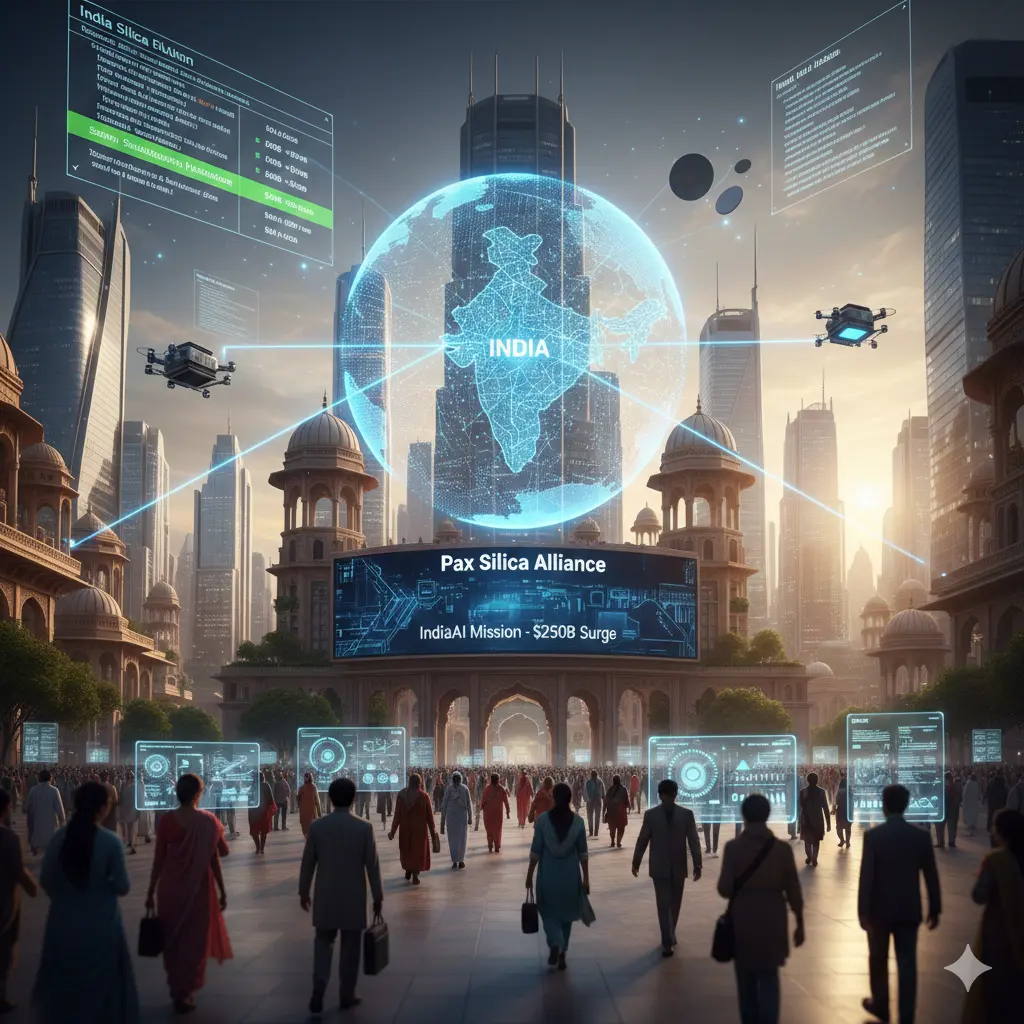
This is the idea that countries need their own AI factories to produce their own intelligence, rather than relying on US or Chinese tech companies. It’s becoming a matter of national security.
Final Thoughts
The concept of the AI Factory changes the game. It turns intelligence into a commodity—something that can be manufactured, bottled, and sold. It's a lot to take in, but the best thing you can do is stay curious. Don't fear the factory; learn how to run the machines.
Ready to dive deeper? Start by auditing your company's data today—that's your ticket into the factory.